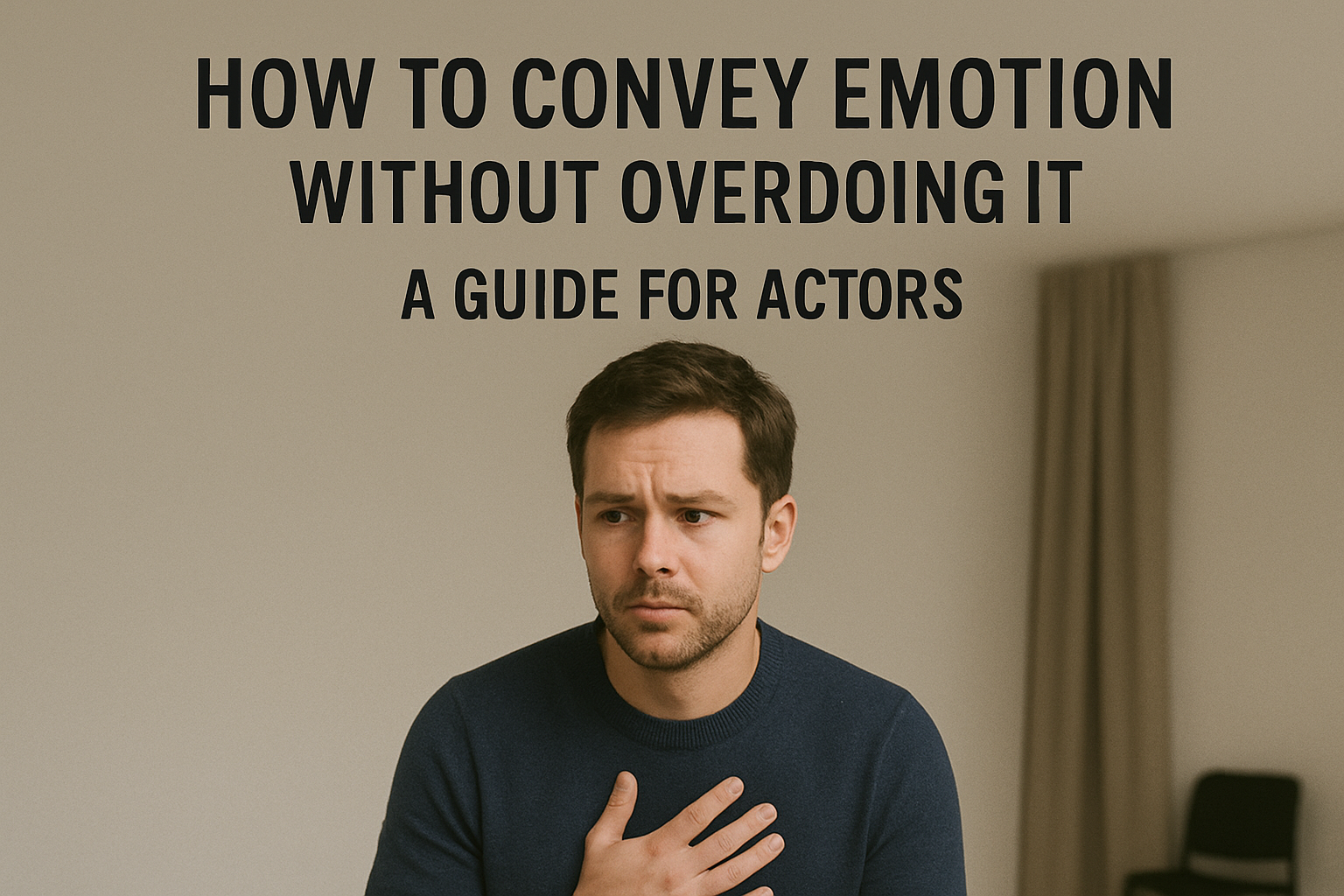
Among the tough battles actors face is how to find the most appropriate balance between emotion display and overacting, either on stage, on camera, or when going for auditions. Many performers fear that without adequate emotions, the moment will fall flat. On the other hand, if emotions are overt, the performance may become exaggerated or not true to life.
The truth is, great acting seldom has to do with forcing emotion. It has to do with understanding it, living in it, and letting it naturally be seen. Underplaying emotion often feels more genuine to the audience, more powerful, and more believable.
In this blog, we'll explore how to portray emotion effectively without overdoing it, why subtlety matters, and what techniques professionals use to keep performances grounded and real.
1. Start With Truth, Not Performance
The foundation of emotional authenticity is truth. Before showing any feeling, ask
Why does my character feel this way?
What was it that caused the emotion?
What is going on internally, not just externally?
As you focus on the internal experience, the external expression follows naturally—and it is usually far subtler than we imagine.
For example, real sadness rarely looks like someone sobbing dramatically.
Often, it's quiet: a tightening of the jaw, a long breath, eyes trying not to tear.
Authentic acting is rooted in truth, not theatrics.
2. Remember: Less Is Often More
Most actors try to "show" emotion because they're afraid the audience won't understand their inner world. But strong emotions don't need strong gestures.
Think of powerful film performances—often the most memorable moments are tiny:
A glance away
A slight swallow
A whispered line
A pause before speaking
These micro-expressions communicate volumes.
On camera, in particular, the lens captures what the audience misses when the actors are on stage.
Subtlety is not “doing nothing,” it is allowing an emotion to exist, rather than performing it.
3. Focus on Reactions, Not Actions
Emotion resides in reactions. Rather than thinking:
“I need to look angry,”
try:
"What did they say that hurt me?"
Instead of thinking:
“I need to cry,
ask:
“What am I trying hard not to let them see?
Everything just got a whole lot different.
In reacting truthfully to what's happening, you naturally avoid overacting because your performance becomes point-to-point, moment-to-moment, not something inflated from the outside.
4. Use Your Breath-It's Your Emotional Anchor
Breath is one of the most powerful emotional dictators, and most actors don't realize it.
Rhythm changes with different emotions.
Anger → shorter and sharper breaths
Sadness → heavier, slower breaths
Fear → fast, shallow breathing
Relief → sudden exhalation
You can convey a deep emotion with far more subtlety by adjusting your breathing instead of your facial expressions or gestures. Breath leads the body naturally. You don’t have to force anything.
5. Avoid "Pre-Playing" the Emotion
What's common is going into a scene already in an emotion.
Real humans rarely start a conversation at the height of a feeling unless something just happened seconds earlier.
Rather than start fully sad, angry, or panicked, build into it. Let the emotion rise moment by moment as the scene progresses.
That not only prevents overacting but also makes the emotional arc believable and engaging.
6. Stay Connected to the Other Actor
Overacting often occurs when the performers are thinking far too much about themselves what they look like, how emotional they appear, or whether their performance is “convincing.”
Shift the focus outward.
Really listen
Let the other actor's words affect you
React to, rather than controlling, the moment.
When you are really connected with your scene partners, emotions are organic responses rather than dramatic expressions.
7. Trust Stillness
Movement is not emotion.
In fact, too much physicality constitutes one of the largest signs of overacting.
Stillness is what captures attention. It's what pulls them in.
Consider powerful moments in film when an actor freezes, quiets, or merely holds a gaze.
That stillness carries weight and can often say more than broad gestures or loud vocal choices.
Don't be afraid of pauses, silence, or internal focus. They are tools, not empty space.
8. Use Subtext to Your Advantage
Subtext is what the character is feeling or thinking underneath the words.
Often, characters try to conceal, not express, emotions.
Playing subtext gives depth and prevents exaggeration:
Saying "I'm fine" when you're clearly not
Smiling while hurting inside
Changing the subject because you're uncomfortable
This creates exciting tension and keeps your performance earthbound.
9. Watch Yourself on Camera
Self-awareness is key. If you're preparing for on-camera work:
Film your scenes
Watch with the sound off
Study your facial tension Look for moments that feel pushed. What seems big inside us sometimes may actually appear too huge outside. Recording yourself helps with gauging your emotional expression. 10. Trust the Audience One of the biggest causes of overacting is fear: fear that the audience won't understand what you're feeling. But great acting trusts the viewer to pick up the clues. You don’t need to show them everything. You have only to live truthfully and let the camera-or stage-do the rest.
Final Thoughts
Emotion without overdoing it is about restraint, truth, and connection. When you stop doing emotion and start feeling it, it's then that your work becomes more captivating, more rooted, and more real. Subtlety doesn't weaken your performance-it strengthens it. The audience connects deepest with the moments which feel real, lived-in, and quietly human. Emotional truth is something that can take a lifetime to master, but with practice, awareness, and trust in the moment, you can deliver those powerful performances that resonate without ever falling into exaggeration.




The entertainment sector is witnessing a huge shift, and the epicenter of this revolution is digital media. Those days are long gone when acting careers were reserved for silver-screen movies or television. Now, web series and digital media such as Netflix, Amazon Prime, Hotstar, YouTube, and MX Player have opened up the floodgates of opportunities for thespians. But what does it actually mean to be an actor in the digital age? Is it all that different from acting in the past? And why do web series prove so engaging as a platform for new and established performers?
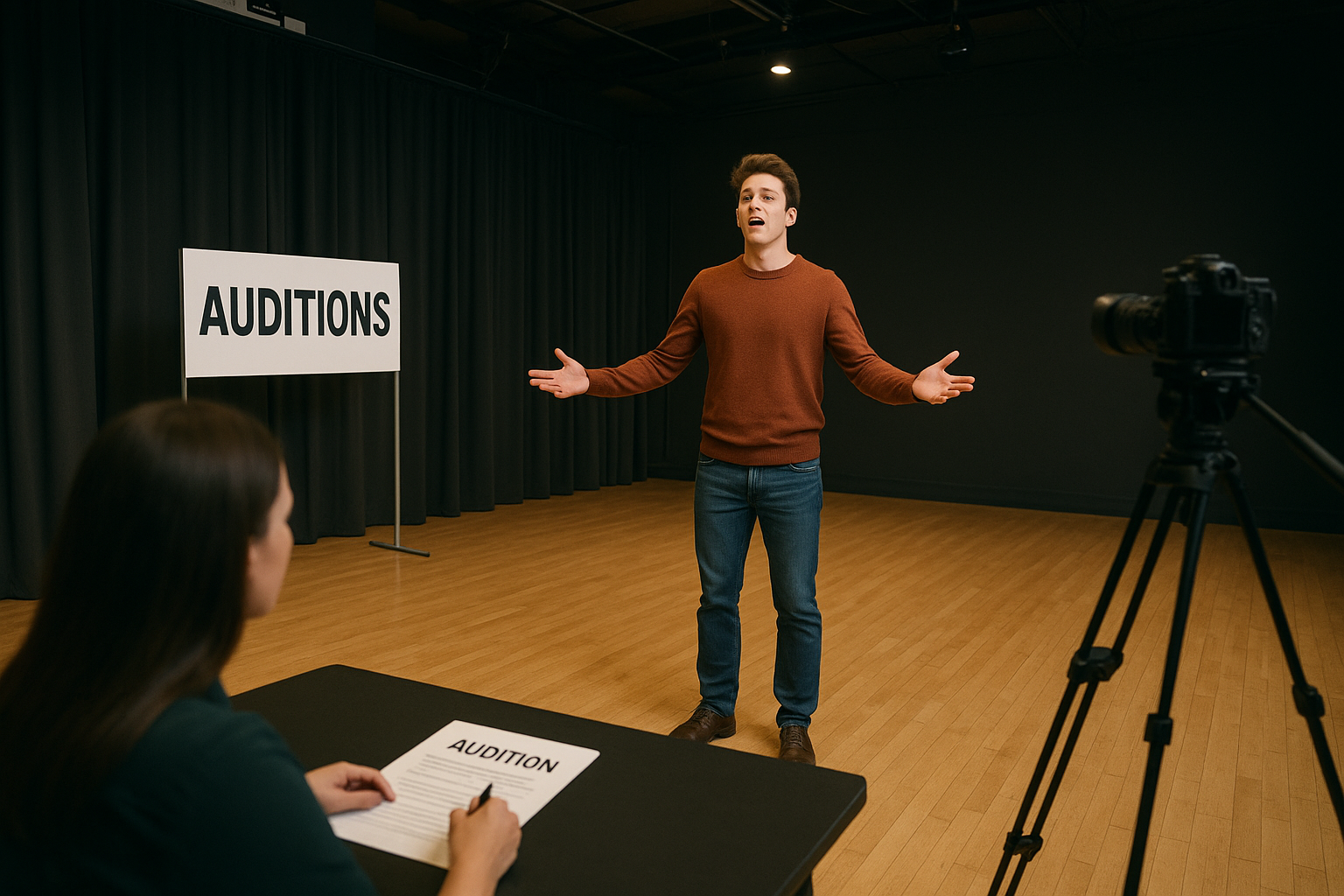
Acting may be an art, but in the world of professional performance, it begins long before the cameras roll or the stage lights shine. It begins with the audition — the often nerve-wracking, unpredictable process that determines whether an actor even gets the chance to perform. For aspiring actors, understanding the relationship between auditioning and acting is not just important — it's essential. One feeds into the other, and together, they shape an actor’s growth, resilience, and ultimate success.
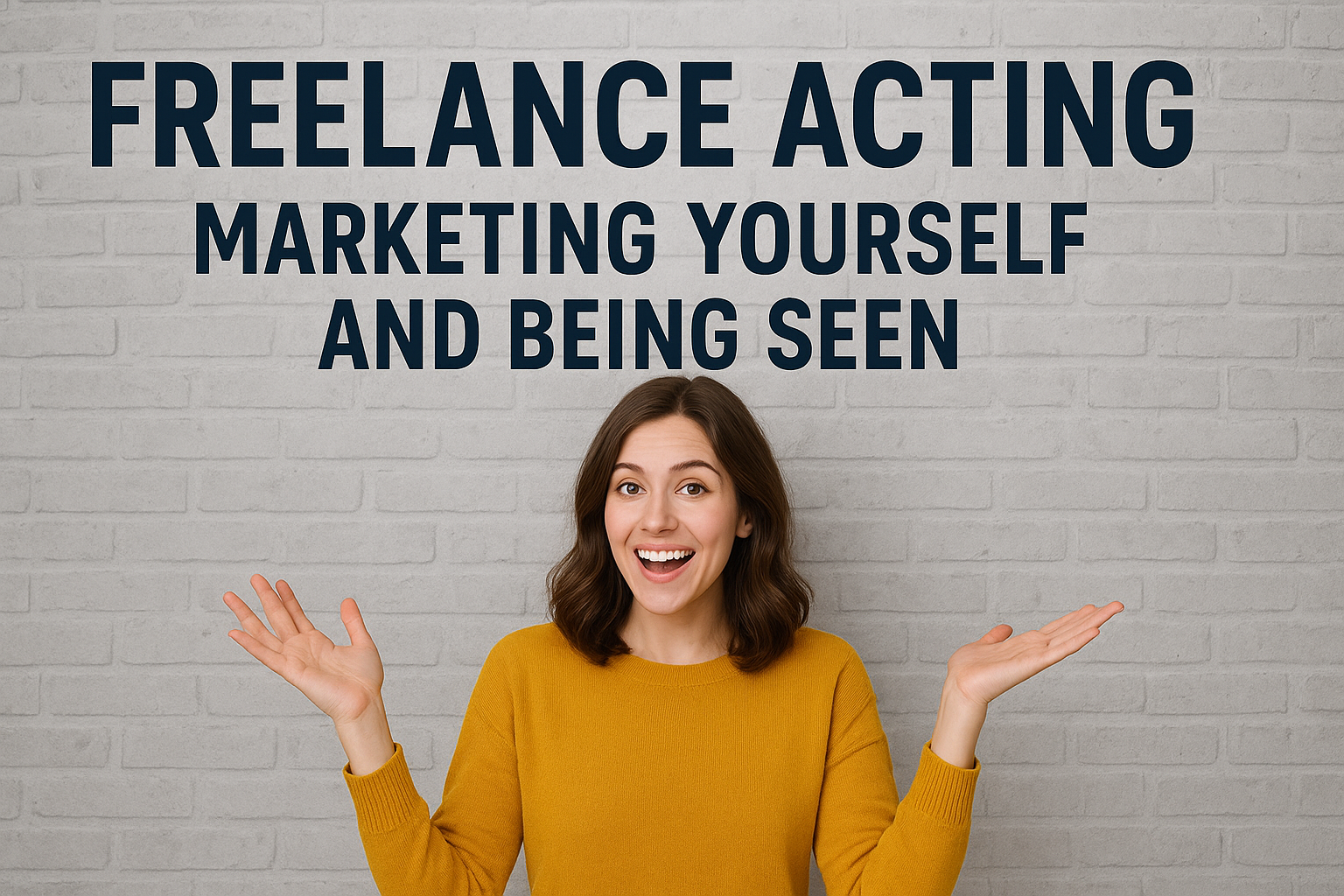
Getting into acting is hard — but succeeding as a freelance actor might be harder. Without the support of a large agency, production company, or manager, you're basically a sole proprietorship. You're the product, the marketer, the promoter, and the brand. So how do you become visible? How do you promote yourself as a freelance actor among so many talented individuals? Whether you're new to the game or wanting to level up, this guide will take you through essential strategies to create visibility, bring in opportunities, and establish yourself as a player in the cutthroat industry of freelance acting.

Most people think of the film and television business and immediately envision the stars—the leads whose names are emblazoned in large letters on posters and opening credits. But bringing every suspenseful courtroom drama, busy city street, and raucous restaurant scene to life are a legion of individuals who support them: background actors.
Lights Camera Audition!
Don't miss out on the latest updates, audition calls, and exclusive tips to elevate your talent. Subscribe to our newsletter and stay inspired on your journey to success!