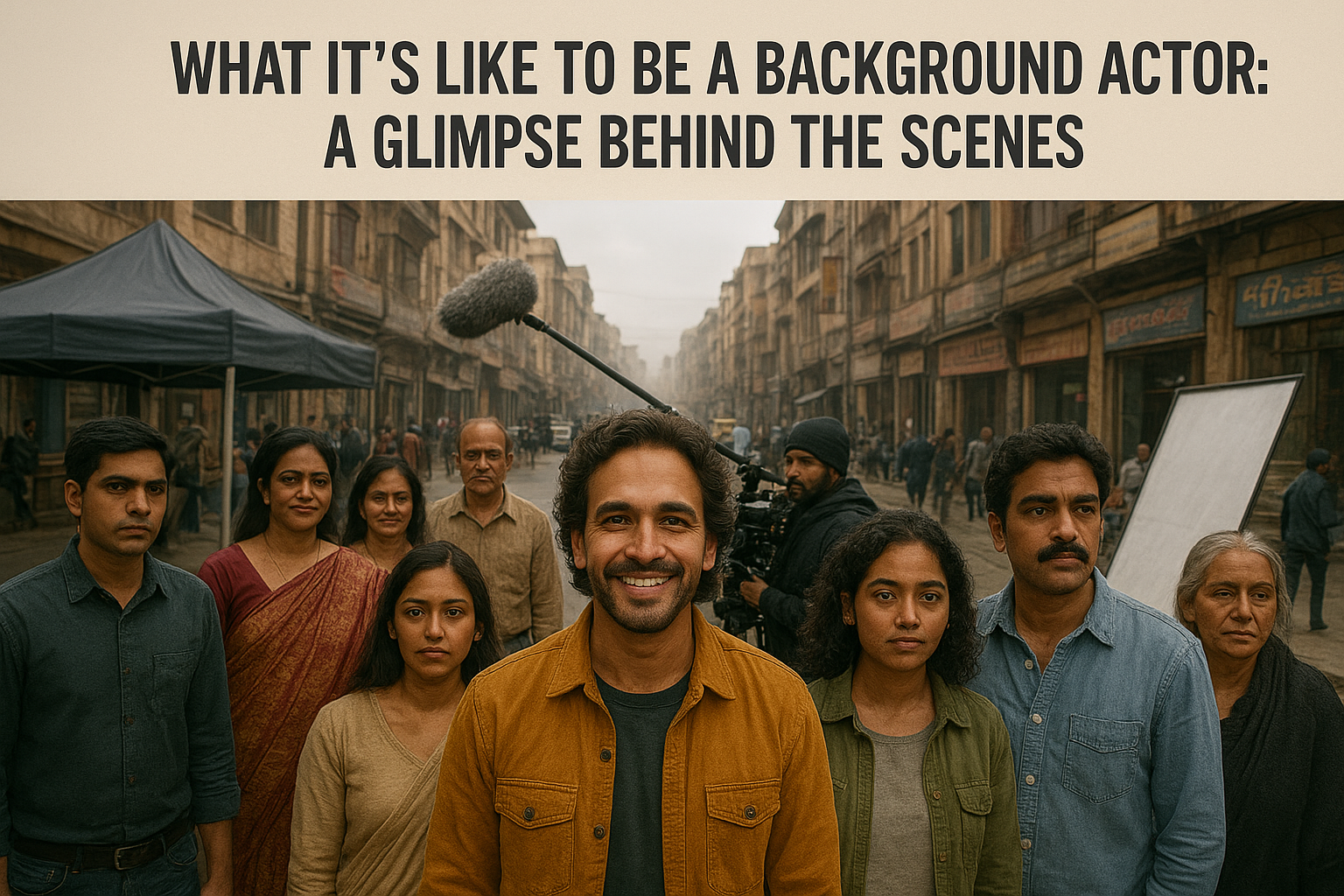
Most people think of the film and television business and immediately envision the stars—the leads whose names are emblazoned in large letters on posters and opening credits. But bringing every suspenseful courtroom drama, busy city street, and raucous restaurant scene to life are a legion of individuals who support them: background actors.
Often overlooked, background actors (or “extras,” as they’re sometimes called) play a vital role in making scenes feel real. Without them, your favorite movies and shows would feel strangely empty—like watching a play on a stage with no props or set. I’ve had the chance to step into this world, and let me tell you, being a background actor is a unique, weirdly fascinating, and often humbling experience.
The Art of Fitting In
The very first thing you learn as a background performer is this: you are there to not be seen. You are to blend in with the world, not be a focus. If you're a New York street pedestrian, a diner customer, or a hospital patient visitor, your task is to bring realism to a scene but to take no attention away from what's happening at the center.
You're basically human set dressing—and that doesn't imply there's no art involved. You must hit your marks, respond naturally, and do your actions the same exact way for several takes. You're usually acting out conversations (mouthing words silently like "watermelon" or "peas and carrots" to mimic speech), all the while avoiding looking into the camera or upstaging the leads.
The Early Mornings and Long Days
If you’re someone who loves structure, background work might test your patience. Call times can be brutal—sometimes as early as 4:00 AM—and your day could stretch to 12 or even 16 hours. A lot of your time is spent waiting. Waiting to be checked in. Waiting in holding. Waiting for your scene. Waiting for lunch. Waiting for wrap.
It's not unusual to stand in line in a massive warehouse or tent for several hours before you're even taken to set. But when you do get called, things shift. Instantly, you're in the thick of it. Lights, camera, background, action!
Wardrobe and "The Look"
Most shoots will require you to provide your own wardrobe choices. You'll receive wardrobe notes such as "business casual," "1970s streetwear," or "high-end cocktail party." Some shows—particularly period shows—will get you dressed head-to-toe in bespoke costumes. And if you're one of the lucky (or unfortunate, depending on your attitude toward wigs), you may even have your hair and makeup styled.
Films are usually quite precise about "the look." Tattoos can have to be covered up. Bright colors can be prohibited. And if you arrive in something inappropriate for the scene, the wardrobe staff will nag you or, worse still, send you home.
No Lines, No Problem (Usually)
Most background actors don’t have speaking lines. If you do happen to be featured and get a line, it can be a big deal. It might mean a bump in pay or even a step toward joining the Screen Actors Guild (SAG-AFTRA), the union that represents film and television performers.
But even lineless, working on a set can be a learning experience. You get to see experienced actors work, observe how directors relay instructions, and notice the complex choreography that goes into the most straightforward scenes. It's like having a movie school experience—tuition free.
The Community
One of the highlights of background work is the individuals you encounter. You may find yourself speaking with an aspiring actor, a retired schoolteacher, a comedian, or someone who is just doing something different on any given day. Background performers are a diverse group of people, and the discussions in the holding rooms can be quite rich.
There is also camaraderie. You're either shivering in the rain on a night shoot or wedged into a mock subway car, but there's a bond that forms when you suffer through the mayhem of a film set together.
The Glamour (and Lack Thereof)
Yes, you get to appear on TV and film. Yes, you may pass by a celeb. But if you're thinking glitz and glamour, you're going to be disappointed. Oftentimes, you're sitting in a plastic chair under fluorescent lights, having a sandwich in a dusty parking lot behind the studio.
That being said, there's something ridiculously awesome about seeing yourself in the final product—even if it's just the back of your head in a low-resolution restaurant background. And who knows, maybe you do get that single shot where you happen to walk directly behind the lead actor and filch a little of the frame.
Is It Worth It?
That varies depending on what you're seeking. If you're seeking fame, background work is not the golden ticket. But if you're interested in how films are created, enjoy people watching, and don't care about working long hours for modest compensation, it can be a great job.
Some individuals earn a good side money working background jobs on a regular basis. Others work it as a means to get into the business. And for most, it's merely an amusing anecdote for parties: "Hey, did you notice me passing by the coffeehouse in episode 3 of that Netflix series?"
Being a background actor is a lesson in patience, professionalism, and point of view. You might not be the center of attention, but you're constructing the world that makes the story credible. It's a peculiar combination of the ordinary and the extraordinary—one minute you're waiting in cold for hours, the next you're in a perfectly lit take that will be watched by millions.
So the next time you see a movie or TV show, look at the guys walking down the street, eating in the diner, or dancing at the club. They might not be listed in the credits, but they're all part of the fabric. And perhaps one of them was me.



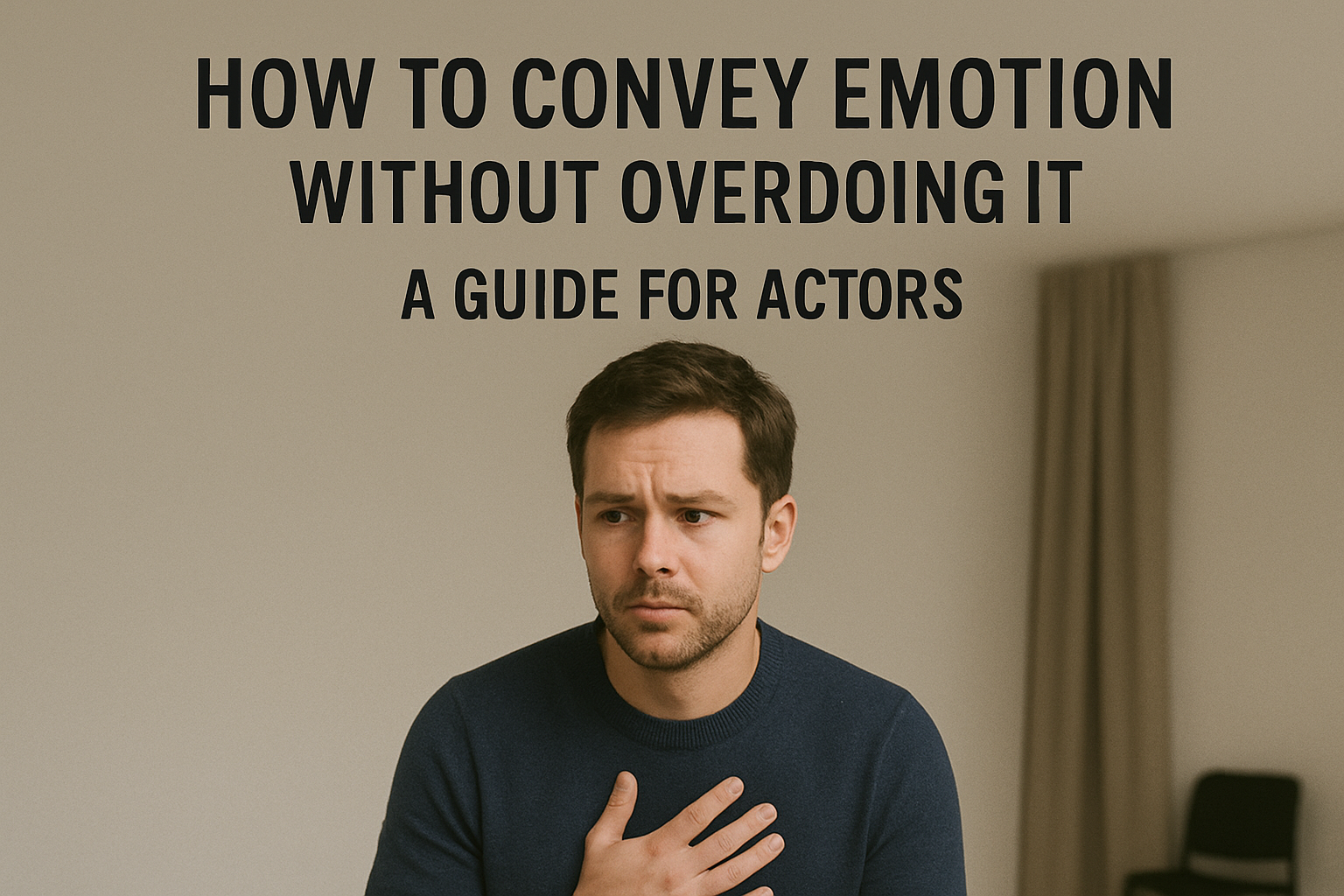
Among the tough battles actors face is how to find the most appropriate balance between emotion display and overacting, either on stage, on camera, or when going for auditions. Many performers fear that without adequate emotions, the moment will fall flat. On the other hand, if emotions are overt, the performance may become exaggerated or not true to life.

The entertainment sector is witnessing a huge shift, and the epicenter of this revolution is digital media. Those days are long gone when acting careers were reserved for silver-screen movies or television. Now, web series and digital media such as Netflix, Amazon Prime, Hotstar, YouTube, and MX Player have opened up the floodgates of opportunities for thespians. But what does it actually mean to be an actor in the digital age? Is it all that different from acting in the past? And why do web series prove so engaging as a platform for new and established performers?
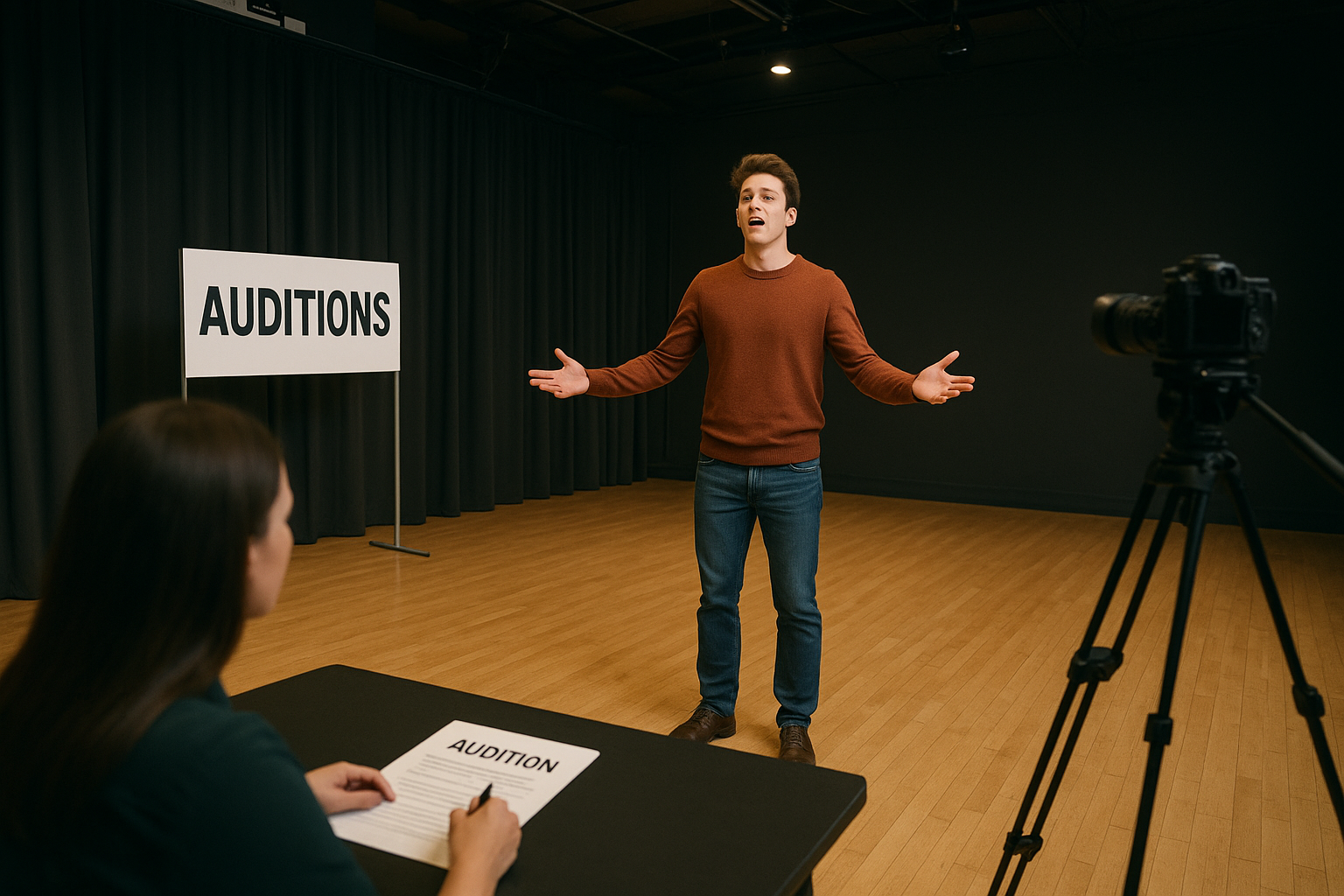
Acting may be an art, but in the world of professional performance, it begins long before the cameras roll or the stage lights shine. It begins with the audition — the often nerve-wracking, unpredictable process that determines whether an actor even gets the chance to perform. For aspiring actors, understanding the relationship between auditioning and acting is not just important — it's essential. One feeds into the other, and together, they shape an actor’s growth, resilience, and ultimate success.

Getting into acting is hard — but succeeding as a freelance actor might be harder. Without the support of a large agency, production company, or manager, you're basically a sole proprietorship. You're the product, the marketer, the promoter, and the brand. So how do you become visible? How do you promote yourself as a freelance actor among so many talented individuals? Whether you're new to the game or wanting to level up, this guide will take you through essential strategies to create visibility, bring in opportunities, and establish yourself as a player in the cutthroat industry of freelance acting.
Lights Camera Audition!
Don't miss out on the latest updates, audition calls, and exclusive tips to elevate your talent. Subscribe to our newsletter and stay inspired on your journey to success!